
GBA Annual Achievement Awards
2026 Annual Achievement Awards Finalists
The Annual Achievement Awards Finalists Have Been Chosen!
Please look over the 3 Finalists per Award and choose one winner per each of the 5 awards.
You do not need to be a GBA Member to vote, so feel free to invite all your friends and family to participate. There is no charge for voting.
Winners will be announced from stage at the AAA ceremony, October 2 in New York city at the UN headquarters building. Winners do not need to be present to win. All finalists will be alerted that they made the finishing round and will be encouraged to come.
The voting is now CLOSED.
Winners will be announced on October 2 in New York at the Fintech Summit
Leadership
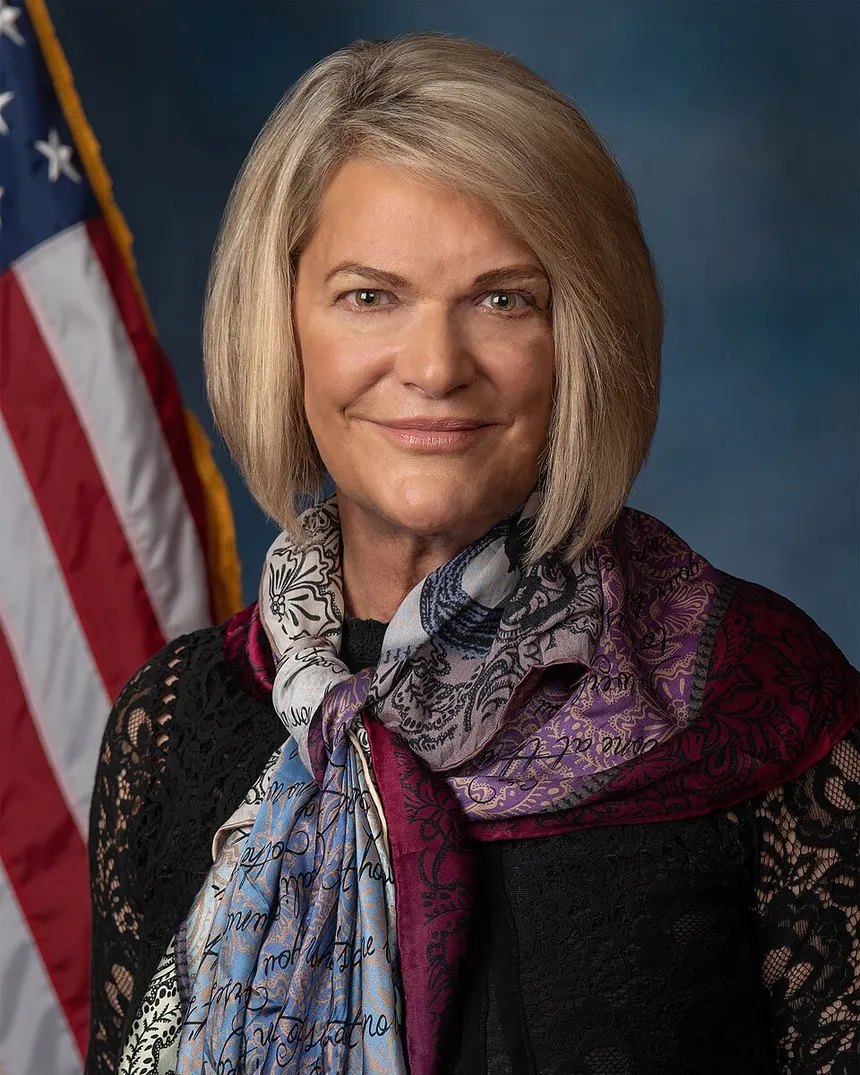
Long before digital assets were accepted in Washington, Senator Cynthia Lummis knew that blockchain innovation needed clear rules that would allow responsible companies to build and innovate in America.
As Chair of the Senate Banking Subcommittee on Digital Assets, Senator Lummis has continued bringing lawmakers from both parties together. In 2026, digital asset market-structure legislation advanced through the Senate Banking Committee with a bipartisan 15–9 vote. This was an important step toward the regulatory clarity she has championed for years.
Senator Lummis has been a leader for blockchain and digital assets in the United States.

Armand Gaetan Ngueti should win the GBA Leadership Award because his leadership has been about bringing others forward.
Armand has traveled across 13 African countries, training more than 6,000 students, educators, and government officials in digital literacy, technology adoption, and emerging technologies. He has also been important in bringing GBA into Africa, serving as GBA’s Africa Lead and helping expand technology across the continent.
Today, Armand is applying his leadership to African agriculture. His work uses blockchain traceability to help farmers and producers verify the source and quality of their products, building trust and opening opportunities for African products in international markets. Armand’s efforts have produced a real-world impact in Cameroon’s agricultural supply chain.
Armand has now become the Chair of GBA’s Food Supply Chain Working Group, the first African leader to hold that position, where he is bringing African innovation to address global food security.
Armand doesn’t just talk about Africa’s technological future. For decades, he has taught people, built organizations, developed leaders, and created ways for others to participate in it. That is leadership.
Awards
Nominated as a T20 Delegate during G20 Summit in South Africa (2025)
Government Blockchain Association — Africa Chairperson / Regional Lead. GBA appointed Ngueti as its first Africa Regional Lead in 2018, citing his leadership, community-building ability, and commitment to using blockchain to improve people’s lives.
First GBA Chapter President in Africa. He is the first person appointed to lead a GBA chapter on the African continent, in Yaoundé, Cameroon.
Microsoft MCT Regional Lead. Microsoft selected him as an MCT Regional Lead, a leadership role involving mentoring Microsoft Certified Trainers, organizing community activities, and advising the program.
National President, Blockchain Association of Cameroon. Armand was elected founding National President in 2018 and has continued advocating for blockchain adoption in government and industry.
TechEconomy recognition. In 2024, TechEconomy included him among “15 Africans Shaping the Future of Technological Advancement in the Web3 Space”
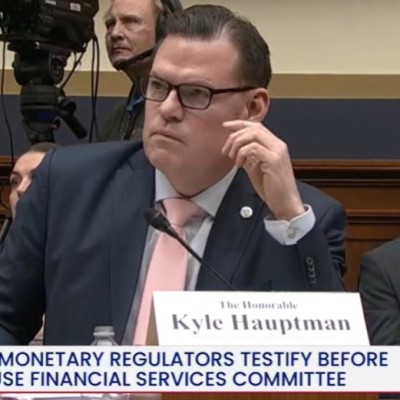
Kyle Hauptman, the Chairman of the National Credit Union Administration (NCUA), is nominated for the Leadership Award because he has consistently pushed government towards responsible technology innovation. Kyle began promoting blockchain and digital assets at NCUA years before they were mainstream financial topics.
In 2021, the NCUA issued an official clarification telling federally insured credit unions that NCUA did not prohibit them from partnering with outside companies that provide digital-asset services to their members, provided they followed the laws and appropriate risk controls.
Then in 2022, NCUA stated that credit unions themselves were not prohibited from developing, purchasing, or using blockchain/distributed-ledger technology for legally permissible activities.
Kyle also hosted NCUA’s “Blockchain Helping Main Street” discussion, focusing on how technologies such as 24/7 cross-border payments could expand financial access for ordinary and underserved consumers.
Now, as Chairman, Kyle is leading NCUA’s implementation of the GENIUS Act, drafting rules that would allow credit unions to issue stablecoins without putting them at a disadvantage to banks.
Kyle has a simple philosophy: “don’t let credit unions become the next Blockbuster because their regulator wouldn’t let them compete.”
He has helped remove regulatory uncertainty so credit unions can responsibly explore the technology.
Awards
Designated 13th Chairman of the NCUA (2025)
Confirmed by the U.S. Senate to the NCUA Board (2020)
Selected as Vice Chairman of the NCUA Board (2020)
Innovation

I nominate Charles Hoskinson for the GBA Innovation Award because his career has demonstrated that he doesn’t stop innovating after solving one problem. He moves on to the next one.
Charles Hoskinson was a co-founder of Ethereum, and he helped move blockchain beyond digital currency into programmable technology. He then founded Input Output and launched Cardano, using a radically different approach, which was building blockchain through academic research, peer review, mathematical proofs, and evidence-based engineering.
That work led to Ouroboros, the groundbreaking proof-of-stake protocol developed through his organization’s research program. Ouroboros demonstrated that decentralized consensus could be secure without relying on energy-intensive mining.
But Charles kept going. Cardano has expanded into decentralized governance, giving communities greater responsibility and ownership for the systems they use. Today, his work has moved into privacy and zero-knowledge technology, addressing the important challenge of protecting information while still allowing it to be verified.
Ethereum → Cardano → Ouroboros → decentralized governance → privacy.
Charles’s career is a progression of asking, “What’s the next problem technology needs to solve?” Then he assembles the people, research, and resources to solve it. It’s truly the spirit of innovation.
Awards
• 2024 Swiss Blockchain Award Lifetime Achievement. At the inaugural Swiss Blockchain Awards during CV Summit/ETH10X in Zug, Switzerland, Hoskinson and fellow Ethereum co-founders were presented with the Lifetime Achievement Award recognizing Ethereum’s global impact and their role in establishing Switzerland’s Crypto Valley blockchain ecosystem.
• 2024 Canton and City of Zug recognition. Hoskinson was formally recognized by the Canton and City of Zug for his pioneering role in establishing Crypto Valley and for the resulting impact on Zug and the global blockchain economy.
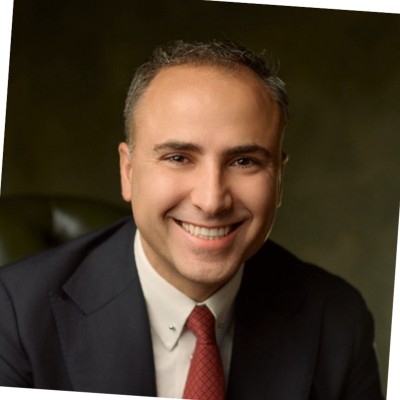
I wish to nominate Dr. Ali El Husseini, CEO of Medici Land Governance (MLG), for the Innovation Award because Ali has spent years turning blockchain theory into projects solving real government problems.
Under Ali’s leadership, MLG helped Teton County, Wyoming become the first U.S. county to record land information on blockchain, creating permanent, verifiable records for deeds, mortgages, and liens. MLG has also taken this technology internationally, helping governments strengthen land records and property rights.
One of MLG’s examples is Baltimore. The city has thousands of vacant properties, and determining who actually owns them requires expensive title searches going back decades. MLG developed blockchain technology that creates permanent property records, helping Baltimore reduce repetitive title work and move abandoned properties toward rehabilitation and new ownership.
In Zambia, MLG’s systematic land-titling program specifically addressed women’s access to property rights. Research presented by Ali reported that the proportion of new titles granted to women rose to 56%, compared with 25% female ownership in the earlier baseline research.
Today, Ali is combining blockchain and AI to modernize government records, finding old problems that governments haven’t been able to solve, then using emerging technology to help solve them.
Awards
-
Forbes Business Council member/contributor. Ali was selected as a member of the Forbes Business Council based on his role as CEO of Medici Land Governance and has published there on economic development and investment.
-
Coinbase Update the System Summit — invited speaker (2025). Ali was selected to present alongside Baltimore City Solicitor Ebony Thompson about Baltimore’s blockchain property-record project and its potential effects on housing affordability and homeownership.
-
FIG / international land-governance recognition. Ali has been selected to present MLG’s research and results at major international land-governance conferences, including work on Zambia’s land-titling program.

Wan Lin has helped make blockchain technology work in the real world.
Wan founded GAChain, because when traditional public blockchains decentralize control, governments can’t simply surrender their legal and regulatory authority.
So GAChain combined the two. Transactions could remain decentralized and tamper-resistant, while government agencies retained their authority and administrative structure. By using smart-contract architecture, GAChain could give different government departments authority over their separate functions.
Then he took on another problem: crypto taxes.
After discovering how difficult it was to calculate his own U.S. crypto taxes, Wan created dTax, an open-source, AI-powered tax platform. It supports 22 blockchains and 13 different cost-basis methods and is designed to help taxpayers and accountants make sense of increasingly complicated digital-asset transactions.
Wan is an innovator, looking for situations where emerging technology can solve real-world problems. He has built unique tools to make the two work together. This is why he deserves to win the GBA Innovation Award.
Social Impact

Dr. W. Scott Stornetta has spent more than three decades using cryptography to solve one of society’s most important challenges: ‘How can people trust digital information?’
As one of the co-inventors of blockchain, his early work shaped the creation of a new digital era, even influencing Bitcoin. This laid the foundation for technologies that now support finance, government, healthcare, and countless other industries. Rather than resting on those achievements, Scott continues to focus on solving today’s problems.
As CEO of SureMark Digital, he is helping organizations protect themselves against one of the greatest emerging threats of our time, AI-generated fraud, deepfakes, and digital impersonation. SureMark provides cryptographic verification that allows individuals and organizations to prove authenticity and establish trust in an increasingly AI-driven world.
Scott has dedicated his career to creating technologies that protect people rather than exploit them. His work strengthens digital trust, and safeguards identities. SureMark Digital is helping governments, businesses, and humans confidently interact with artificial intelligence and digital communications. His contributions continue to make technology more secure, more trustworthy, and more beneficial for society. For these reasons, I believe Dr. Scott Stornetta is an outstanding candidate for the 2026 GBA Social Impact Award.
Awards
1992 Discover Award for Computer Software
Three Citations in the Bitcoin White Paper
First Commercial Blockchain
Scott’s pioneering work has been recognized with the 1992 Discover Award for Computer Software, and his research is cited three times in Satoshi Nakamoto’s original Bitcoin white paper. Yet rather than resting on those achievements, he continues his mission through SureMark Digital, helping protect governments, businesses, and individuals from AI-driven fraud and digital impersonation.

Carmelle Cadet is the founder and CEO of EMTECH, and she is using technology to stop financial exclusion in the financial infrastructure of entire countries.
Carmelle built EMTECH to help central banks modernize using blockchain, digital currency, APIs and real-time regulatory technology.
Cadet’s company helped the Bank of Ghana create a controlled environment where new financial technologies can be tested safely before being introduced more broadly. Regulators can see whether a new product is safe, whether consumers are protected, and whether existing rules need to be adjusted for new technology.
She then took the idea beyond one country. EMTECH partnered with the West African Monetary Institute to help modernize financial regulation across the six countries of the West African Monetary Zone.
Carmelle’s work is more than building another financial app. She is working on the infrastructure under the system so that safer, more accessible financial services can reach millions of people who have traditionally been underserved.

I’m nominating Keiko Yoshino for Social Impact for the amazing work she has done in Puerto Rico. Their blockchain community had a wide gap, with only the priviledged few getting information, training and advantages.
When Keiko arrived in Puerto Rico, many of the people participating in crypto were transplants from overseas rather than local Puerto Ricans. In 2021, she created CryptoCurious, a free education program offering blockchain and Web3 training in both English and Spanish.
Through CryptoCurious and the Puerto Rico Blockchain Trade Association, where Keiko is Executive Director & Co-Founder, she helped provide more than 100 workshops reaching over 4,000 people. The programs teach practical subjects including blockchain, Bitcoin, Ethereum, smart contracts, NFTs, Web3, and even how to set up a crypto wallet.
She also helped create a partnership with the University of Puerto Rico at Mayagüez and PRTEC to bring blockchain training to students and workers preparing for technology careers.
Keiko has made a social impact on Puerto Rico by taking knowledge that can be technical, intimidating, and often available only in English, and made it free and accessible to Puerto Ricans who want to participate in the blockchain economy.
Awards
Forbes — “Asian American and Pacific Islander Crypto Leaders to Watch,” 2023. Forbes featured Keiko for her work as co-founder and executive director of the Puerto Rico Blockchain Trade Association.
Butterscotch Media — 2025 Web3 Watch List. Keiko was listed as a person to watch.
Courage

Roya Mahboob qualifies to receive the 2026 GBA Courage Award because she has used technology to create opportunity and financial independence for women and girls in Afghanistan.
She was one of Afghanistan’s first female technology CEOs, and she helped start the Afghan Girls Robotics Team, also known as the Afghan Dreamers, in 2017 through her nonprofit, the Digital Citizen Fund. This created an opportunity for young Afghan women to study engineering, build robots and compete internationally despite severe cultural and political barriers.
Ms. Mahboob created education and employment opportunities for women who were often excluded from the traditional economy. When many of the women working with her could not safely access bank accounts, she used Bitcoin to help them receive and control their own money. Roya continued this work despite threats and intense opposition to women participating in technology and business. Her courage demonstrates how technology can become a practical tool for freedom, dignity, and hope.
Awards
• TIME 100 Most Influential People in the World — 2013
• Tribeca Disruptive Innovation Award — 2014
• World Economic Forum Young Global Leader — 2015

Brittany Kaiser demonstrated great courage by risking her career, reputation, and personal safety to expose unethical data practices at Cambridge Analytica. Millions of Facebook users had their personal information collected without their informed consent through a personality-quiz app that also took data from users’ friends’ profiles, people who had never taken the quiz or agreed to participate. That data was then used to build detailed psychological profiles that helped political campaigns target voters with manipulative messages based on their personalities, fears, and preferences.
Rather than watch this and say nothing, Brittany chose to speak out. She became a whistleblower, testified before governments, and helped expose how personal data could be misused to influence people without their knowledge.
Following this, Brittany dedicated her career to making technology better. As the CEO of Alpha Compute, she has become a leading advocate for ethical AI, responsible blockchain innovation, digital privacy, and individual ownership of personal data, working with governments and organizations around the world to promote technology that serves people rather than exploits them.
It takes courage to challenge powerful institutions. It takes greater courage to dedicate your life to ensuring those mistakes are never repeated. Brittany Kaiser exemplifies that courage.
Awards
Forbes – America’s Top 50 Women in Tech (2018)
Brittany was named one of Forbes’ “America’s Top 50 Women in Tech”
Featured in the Netflix documentary The Great Hack
Author of Targeted
Her book, Targeted: The Cambridge Analytica Whistleblower’s Inside Story has become an important account of the scandal and her decision to expose it.

I’m nominating Peter Van Valkenburgh, Executive Director of Coin Center for Courage, because he has been brave enough to challenge powerful government agencies when he believes blockchain users and developers are losing basic constitutional rights.
When the U.S. Treasury sanctioned Tornado Cash, Peter and Coin Center sued the US Treasury, arguing that the government could not treat immutable open-source smart-contract code like a person or company and that ordinary Americans still have a right to financial privacy. Treasury ultimately removed the Tornado Cash sanctions in 2025.
Coin Center also sued the Treasury Department over a law requiring people receiving more than $10,000 in crypto to collect and report personal information about the sender. In 2024, Coin Center won an important federal appeal allowing its constitutional challenge to move forward.
Peter has also filed legal arguments defending open-source developers facing criminal prosecution, including Tornado Cash developer Roman Storm, and supported developer Alexey Pertsev’s appeal in Europe.
Peter’s courage is needed today. When government policy threatens privacy, open-source software, or the right to use blockchain technology, Peter has been willing to take the government to court and fight it.
Awards
2024 Crypto Impact 100 — The Giving Block. Peter was named one of the 100 most impactful people shaping crypto in 2024.
Organization
I am proud to nominate Baltimore City for the Organization Award for taking a real urban problem and trying something creative and different to solve it.
Baltimore has long struggled with thousands of vacant and abandoned properties. One major obstacle to putting these homes back into use is finding out who actually owns them. Properties may have been abandoned for decades, with owners that may have died or moved away, and every transfer requires another costly title search.
Instead of accepting that broken process, Baltimore turned to blockchain.
The City launched an initiative to create secure, permanent digital records for approximately 14,000 vacant properties, making property information easier to find and ownership records easier to verify. The goal is to reduce title costs and help move abandoned properties through the system faster so they can be bought, rehabilitated, and returned to productive use.
Baltimore City isn’t using blockchain because it’s fashionable. They’re applying it to an actual government problem that affects neighborhoods, homeownership, property values, and people’s quality of life. This organization is making a citywide impact and is an example to all other cities.
Awards
Nationally recognized as the first U.S. municipality to place its citywide property records on blockchain; project featured at the DC Blockchain Summit, Coinbase Update the System Summit, and Black Blockchain Summit.

BeInCrypto should win the GBA Organization Award because they have done something incredibly important for an emerging industry: they have helped millions of people understand it.
Starting with just four people in 2018, BeInCrypto has grown into a global organization with 100+ journalists, more than 7 million monthly views, and content published in 26 languages. That means people around the world can learn about blockchain, digital assets, and Web3 in their own language rather than being excluded from a technological and financial transformation they may not understand.
But they haven’t stopped at reporting the news. BeInCrypto created educational resources, market information, and a Web3 jobs platform that helps people turn knowledge into opportunity. Their journalism has also reached policymakers on Capitol Hill.
More recently, they created global programs to identify and recognize the people, projects, and institutions actually moving blockchain forward.
What is most impressive about BeInCrypto is their reach. They have taken a complicated new technology and built a global platform that helps millions of people understand it, question it, find opportunities in it, and participate in its future.
Awards
Best Crypto Publisher — The Crypto Awards 2025. BeInCrypto was named Best Crypto Publisher at The Crypto Awards 2025, which recognized projects and organizations across 24 cryptocurrency and blockchain categories.
• Blockchain 100 Award 2025 — Crypto Press Winner. BeInCrypto was selected by public vote as one of the leading media organizations in the Crypto Press category of Binance’s inaugural Blockchain 100 Awards.
• Best Website for Cryptocurrency News — ADVFN International Financial Awards 2021. ADVFN gave BeInCrypto its Best Website for Cryptocurrency News award.